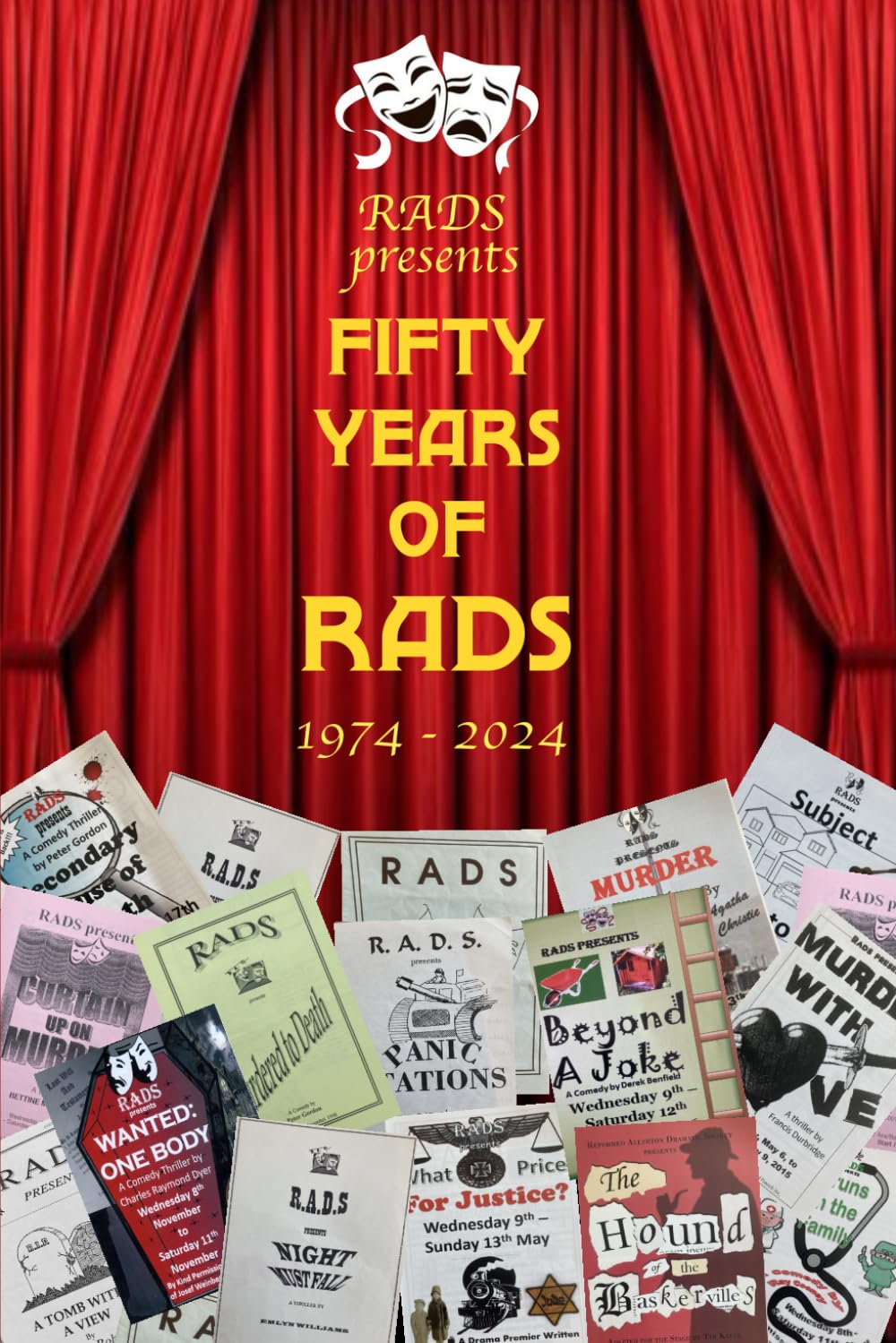
It’s RADS’ 50th birthday this year and to mark the occasion, local writer and RADS member Nick Broadhead has dug into the archives to write a book detailing the history of RADS. We’re pleased to announce that Fifty Years of RADS can now be purchased online! We caught up with Nick to find out more about the book and the history of RADS …
When did you first become aware of RADS?
“In 2018, an old friend, RADS member Heather Dickinson, invited my wife and I to the RADS production of It Runs in the Family, which she was directing. This was the first time that we had visited the URC Hall and we both immediately enjoyed the whole experience – the engaging, community ethos of the surroundings, the commitment of the cast and, above all, the fact that we had experienced a very enjoyable night out – at a very reasonable price.”
What involvement have you had with RADS so far?
“As with any good community enterprise, RADS is very welcoming and works hard both to retain existing members and encourage new members to become involved. There is a Committee that oversees the general running of the society, including forthcoming productions, and, prompted by Heather, they chose a new play that I had recently completed, Subject to Contract. I was very happy to perform in the next production, Funny Money, which, although scheduled for 2020, was delayed for a year due to COVID-19. I’ve enjoyed being in other RADS productions, plays and revues since then.”

What inspired you to write the history of RADS for its 50th anniversary year?
“In conversation with Jennie Jones (RADS Chair) and Nick Pye (RADS Treasurer), it emerged that 2024 would be the 50th year of RADS, which seemed to me to be a remarkable achievement, although Jennie and Nick discussed it in a very modest way. I enjoy both writing and local history, so it seemed a good idea to try to write a history of the Society, especially as there are still people around who have clear recollections of the beginning of the Society and its early days. I thought that the golden anniversary of the Society was something that should not go unmarked and so the idea of a book of its history was born.”
How do you go about researching the history of an amateur drama society and did you encounter any challenges?
“Researching RADS was not unduly daunting as it was established in 1974, before the digital age. This meant that the records of all Committee meetings were hand-written in a ‘Minutes Book’, which gave a fascinating account of the day to day running of a drama society. In addition, following a Committee meeting discussion in July 1978 when the members agreed that ‘selected photos of future productions should be kept in a scrap-book to be administered by the Treasurer, there are nine photograph albums from the early days, many of the accompanied by details of the show date, cast and crew.
There is also a large file that contains programmes for many of RADS performances and these also provide a wealth of information, not just about cast and crew, but also the notes that the more recent programmes provide about the show and the Society in general. Even such mundane matters as the price of admission (3/-, or 15p on the earliest programme) show how much times (and prices) have changed over the years.
One of the challenges was deciphering the handwriting – the notes in the Minutes Book were written as the meeting progressed, so were often quite hurried and quite difficult to read. I read them all initially, making a few notes as I went along, and then, when I was trying to follow up a specific topic (such as the ‘squeaking of the stage’, which came up a few times in Committee meetings) I then had to re-read everything, trying to identify where this was mentioned – it is so much easier with digital documents where all the mentions of a word can be identified at the click of the ‘Find’ key.
Not so much a challenge, but a teasing irritation was where an interesting topic was discussed (such as the mention of ‘the party on the last night of the play as there had been an incident after the last play & they didn’t want a recurrence of this.’) but no further details are provided, leaving me to wonder exactly what did happen … “
Do you have any favourite stories or anecdotes?
“There were many references to things that made me think about almost imperceptible changes that have occurred over the fifty years of RADS – things that were commonplace, but have long disappeared, such as the wearing of stage make-up or the custom of a member of the cast making a thank you speech to the audience after the final curtain on the last night of a run – all now just distant memories.
There are a couple of things that stood out for me, though – one was the fact that the water table in the area used to be much higher and so the area underneath the stage used to flood periodically when there had been heavy rainfall – causing the canoes that the scouts used to store there to bob up and down in their subterranean cavern.
The other was the recollection of Oliver Shaw, the son of RADS founder Margaret Shaw, about the system that was previously used for dimming the stage lights which was ‘a galvanised bucket of acidulated water into which a metal plate was lowered by string to varying depths in order to vary the electrical resistance in the circuit.’ A highly dangerous-sounding practice, but which was commonplace at the time, he says, especially given the way that the curtains were fireproofed as the committee had ‘decided to try out our own recipe for fireproofing’ them.”
Why do you think it’s important to document the history of groups like RADS?
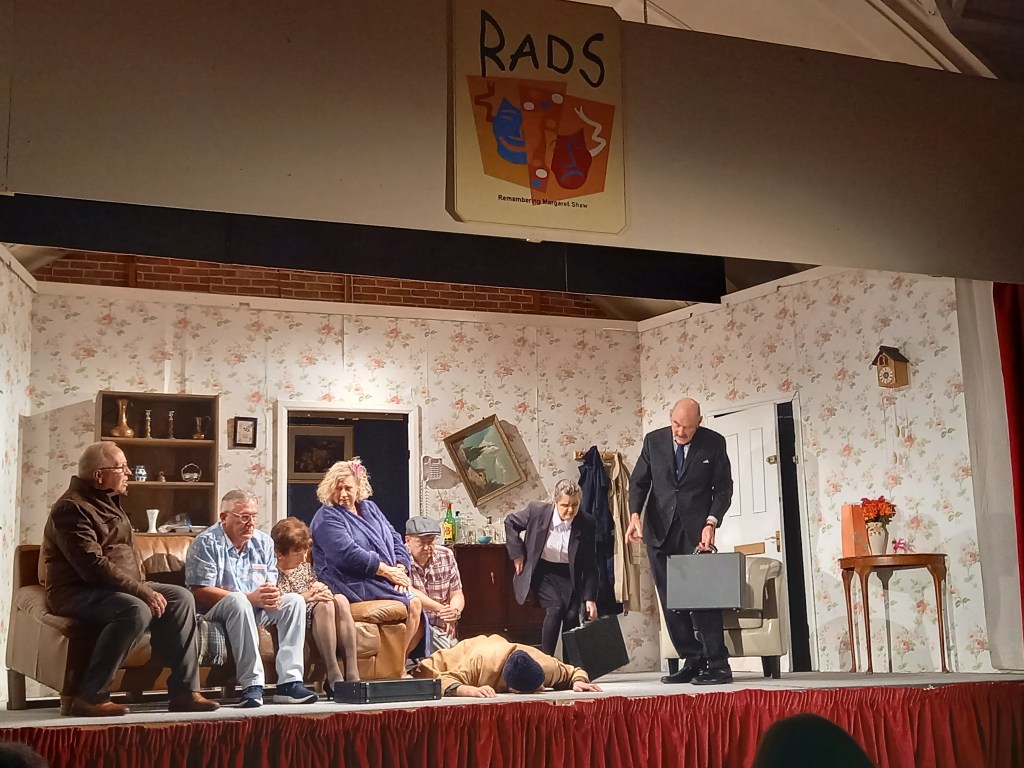
“I quite like history partly because we sometimes hardly notice the changes that are happening all around, and it is only when we stop to consider how things were done only 50 years ago that we realise in what changeable times we now live. I quite like the fact that, although we all feel that we are unique, every time we produce a play we are treading on the same boards that have been trodden by hundreds of other actors over the years, who all would have been going through the same emotions, having the same worries about learning lines and wondering how they were going to find the various props required. We can learn that problems that we are currently encountering have often been faced before, too – the fluctuating number of acting members of the Society, for example and how to encourage new members, which the history tells us has been an issue throughout its entire life.
The history of the group is also a reminder of how society in general has developed – for example women’s role in society – although it may only be a small change, it represents a larger shift in people’s thinking in that in the early days of RADS, there were ‘Chairmen’, ‘Firemen’ and a ‘Wardrobe Mistress’ – we wouldn’t think of assuming that these roles are gender specific now. There are other, gradual changes that have occurred that we tend not to notice, such as the playing of the National Anthem at all public performances and the way that the internet and social media has now become so fully integrated into our lives that we expect to buy tickets online, rather than by handing over cash at the door.”
Where can we get our hands on a copy?
The book Fifty Years of RADS (RRP £7.99) will be on sale at all RADS performances and events (for the next fifty years, when it will be superseded!) and is also available to purchase online at Amazon:
When can we catch the next RADS performance?
Stopped Interrupting, a comedy is performing from Wednesday 12th June to Saturday 15th June 2024 at Allerton United Reformed Hall on the corner of Mather and Booker Avenue, L18 7HD. Doors open at 7 pm and performances start at 7.30 pm. Tickets can be purchased on the door (cash only) or online at www.ticketsource.co.uk/radsdrama.
There is also going to be a RADS 50th birthday celebration at the Hall on Saturday 21st September 2024. Save the date as further details will be announced soon!
 Reformed Allerton Dramatic Society (RADS)
Leave a comment